
How to Clean and Season a Cast Iron Skillet
Scrub, dry, oil, and bake a cast iron skillet to remove residue and build a slick, durable, rust-resistant polymerized protective seasoning layer.
Wash and dry the pan, apply a very thin layer of high-smoke-point oil, wipe off the excess, bake upside down, then cool naturally. Repeat only where the finish is dull or uneven.
Watch: How to Clean and Season Cast Iron
Scrub, dry, oil thin and bake - the four steps that keep cast iron slick and rust free. · 2:46 minute walkthrough. The full written steps are below.
Season cast iron without guessing
Seasoning is a thin, baked-on oil layer. The most common mistake is using too much oil, which makes a sticky surface instead of a smooth one.
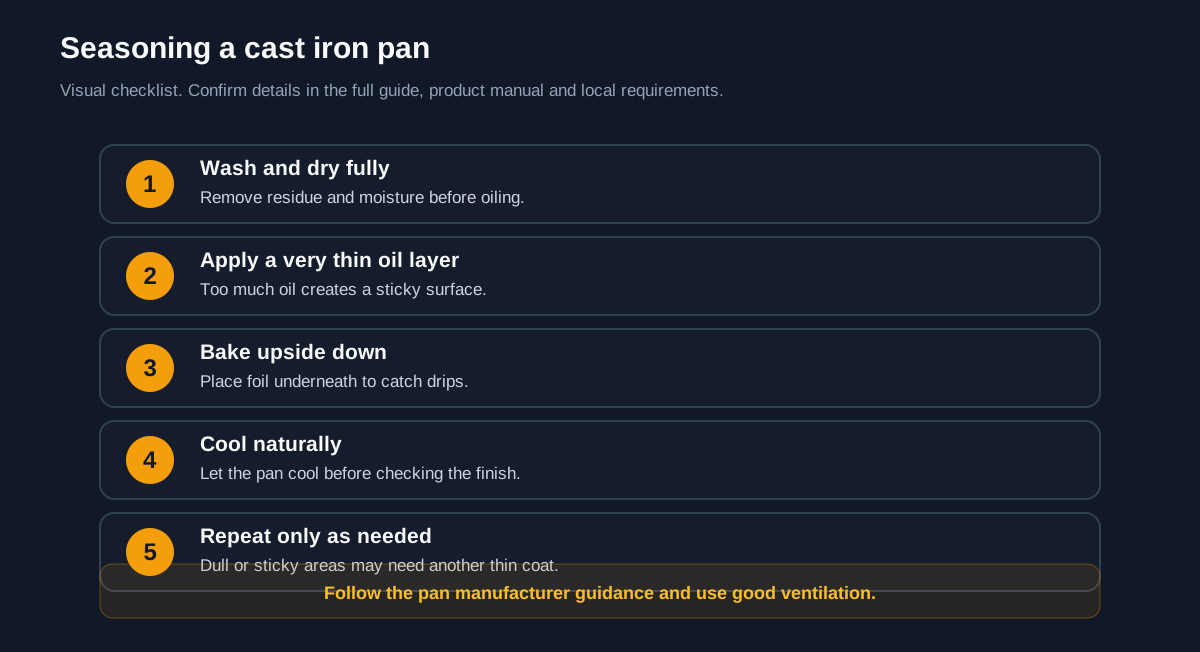
Before you start
- Wash and dry the pan completely.
- Apply oil, then wipe it off as if you made a mistake.
- Bake upside down with foil underneath.
- Repeat only where the finish is dull or uneven.
Common failure points
- Too much oil creates a sticky coating.
- Water left on the pan can cause rust.
- High heat without ventilation can smoke heavily.
Watch the original demonstration
See the source video before you start, then use the step checkpoints below as your field guide.
Play source video on YouTubeKeep learning
- Clean a Cast Iron SkilletRoutine cleaning and storage.
- Cook With Cast IronPreheating and everyday use.
- Cook a Steak in Cast IronPut the seasoned pan to work.
Visual step map
See the full sequence before you start, then check off each step as you go.
0 of 6 steps checked
Materials and cost planner
Select the items you plan to buy, adjust any estimated price, and calculate the selected total.
Editable rough U.S. retail estimates. Estimated all listed: $65.00. Prices are planning estimates, not quotes — tax, store, brand, size and quantity will change them.
Time and finish planner
Estimate active working time from the number of steps in this guide.
Time block calculator
Estimate how long a sequence of tasks will take before you start.
Add transition and waiting time separately. A realistic plan usually needs more time than the active-task total.
- Read the tools, materials, safety notes, and steps below for free.
- Tap See 20-second demo if you want to understand it first.
- Tap Start Camera Coach when you want hands-free help, or Voice-only if you do not want to use the camera.
- Allow camera and microphone. Point your phone at the work; the coach watches your progress and tells you the next step.
🧰 Required Tools & Equipment
- ✓ Stiff-bristle dish brush
- ✓ Lint-free microfiber cloth
- ✓ Baking sheet
- ✓ Aluminum foil
- ✓ Heat-resistant oven mitts
📦 Materials & Supplies
- ✓ Coarse kosher salt
- ✓ High smoke-point oil (flaxseed, canola, or grapeseed)
- ✓ Warm water
⚠️ Safety Checkpoints & Warnings
- • Always use thick, dry oven mitts when handling hot cast iron.
- • Ensure adequate kitchen ventilation as heated oil may produce light smoke.
- • Place skillet upside-down over foil to prevent dripping oil from hitting open heating elements.
📋 Step-by-Step Guide (6 Steps)
Scrub the Pan with Salt
Pour coarse kosher salt into the warm skillet and scrub vigorously using a stiff brush or damp cloth. Work into the corners to dislodge burnt food bits without stripping base metal.
- • Salt turns gray or brown from lifted debris
- • Cooking surface shows uniform texture without crusted food bumps
- • Using harsh dish soap or soaking pan in a water basin
Rinse and Heat-Dry
Rinse the pan quickly under warm running water to remove all salt. Place it on the stovetop over low heat for 3 to 5 minutes until completely dry.
- • No remaining salt grains visible in the basin
- • Surface is completely matte gray-black with zero damp spots
- • Relying solely on a towel to dry, leaving trapped moisture in the iron's pores
Apply a Micro-Thin Oil Layer
Pour half a teaspoon of high smoke-point oil into the warm pan. Rub it thoroughly across the entire surface—interior, exterior, sides, and handle—using a clean cloth.
- • Slight semi-gloss sheen across the entire pan, inside and out
- • Applying too much oil, which creates a sticky, gummy residue after baking
Preheat Oven and Prep Drip Tray
Preheat your oven to 450°F (232°C). Line a lower oven rack with a sheet of aluminum foil or a foil-lined baking sheet to catch stray oil droplets.
- • Oven preheat indicator signals target temperature reached
- • Foil is centered flat on the rack below the intended skillet position
- • Placing foil directly on the oven floor, which can block airflow or fuse to the lining
Bake Pan Upside Down
Place the skillet upside down on the middle oven rack directly above the foil. Bake at 450°F (232°C) for 60 minutes to polymerize the oil layer.
- • Skillet rests securely inverted on center rack with handle accessible
- • Even, dark polymerizing surface visible through oven window
- • Placing skillet right-side up, which causes any excess oil to pool and spot
Cool and Inspect
Turn off the oven after 60 minutes and leave the door closed, letting the skillet cool completely inside for at least one hour. Remove with mitts and check the smooth, hard finish.
- • Pan is cool to touch, displaying a uniform, hard, non-sticky satin-black sheen
- • Finger run across surface meets no tacky resistance
- • Removing pan prematurely and touching hot surface with bare hands
Credit: inspired by an original tutorial by Martha Stewart — watch the original on YouTube.
Don’t have everything?
- No Stiff-bristle dish brush? Chainmail cast-iron scrubber or folded dry kitchen towel
- No Lint-free microfiber cloth? Heavy-duty blue shop paper towels
- No Grapeseed or flaxseed oil? Standard canola oil or vegetable shortening
Frequently asked questions
How much oil should I use to season cast iron?
Use the thinnest possible layer. Apply oil, then wipe it off as if you made a mistake. Too much oil creates a sticky coating.
How often should I season a cast iron pan?
There is no fixed schedule. Season again when the surface looks dull, uneven or begins sticking.
Why is my cast iron sticky after seasoning?
Sticky seasoning usually means the oil layer was too thick. Heat the pan and wipe off excess oil, or scrub the affected area and season again thinly.
Can I use soap on cast iron?
Mild soap is often acceptable, but check the pan manufacturer guidance and dry the pan immediately to prevent rust.